Resize images online with exact width and height control
Set exact image dimensions for websites, social posts, ecommerce catalogs, email banners, blog graphics, ads, and branded content. Upload a photo, keep the aspect ratio when needed, and export a resized file in a clean workflow.
Exact width and height Keep aspect ratio when needed Ready for web, social, and ecommerce
Use this page when you know the final dimensions you need. Scroll for use cases, step-by-step guidance, and the API paths available when image resizing becomes part of a larger production workflow.
Adapt one source image to multiple publishing formats without rebuilding the visual each time.
Custom dimensionsPreset formatsConsistent output
No account required for a quick test
Resize photos for websites, social formats, ecommerce, and branded content
Image resizing is not only about making a file smaller. It helps you fit the right dimensions for a layout, preserve readability in a design, speed up page loading, and keep visuals consistent across channels. A properly resized image is easier to publish, easier to reuse, and easier to fit into repeatable content workflows.
Pixelixe makes that process simple with custom dimensions, preset formats, and a clean editing workflow. If you also need to crop an image, prepare visuals for Instagram, or create broader social media graphics, the same workflow applies.
Why image size matters
Image dimensions influence more than layout. They affect how clean a visual looks on social feeds, product pages, blog posts, landing pages, and mobile screens. When the image is too large, it can slow delivery and create heavier pages. When it is too small or poorly scaled, it can make the visual feel unprofessional, blurry, or unclear.
Resizing also matters for consistency. Teams often need one product photo, one hero image, or one campaign visual in several different formats. Using a reliable image resizer helps keep those outputs aligned without starting from scratch every time.
How to resize an image in 3 steps
Resize with custom dimensions, keep the original ratio, or switch to a preset format for social media, websites, and branded content.
With Pixelixe, you can resize images for websites, blogs, ecommerce, ads, and social content without turning the workflow into a full design project. The goal is simple: keep the source image, adapt the dimensions, and export the final asset faster.
1
Upload your image
Photo, product shot, or branded visual
Drop your image into Pixelixe Studio and start from the original visual you want to adapt. This works well for product images, website assets, campaign creatives, and social content.
2
Resize your photo
Custom dimensions or preset formats
Choose the new width and height, keep the aspect ratio when needed, or use a preset to fit a target format. This helps you prepare images for web layouts, ads, social posts, ecommerce modules, and reusable content systems.
3
Download
Ready for web and publishing
Export the resized image and use it right away on your website, in a campaign, inside an ecommerce flow, or in another visual workflow. You can also duplicate the process later when you need more variants.
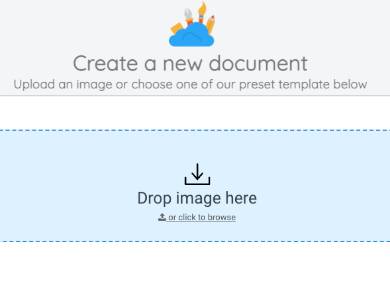
Open Pixelixe Studio and drop your photo into the editor. This is the fastest way to start from the original image you want to adapt for a page, a campaign, a social format, or another published asset.
If you decide to swap the source later, you can reopen the background controls and upload another image without restarting the workflow. That makes it easy to compare several visuals against the same target dimensions.
2 Resize your image
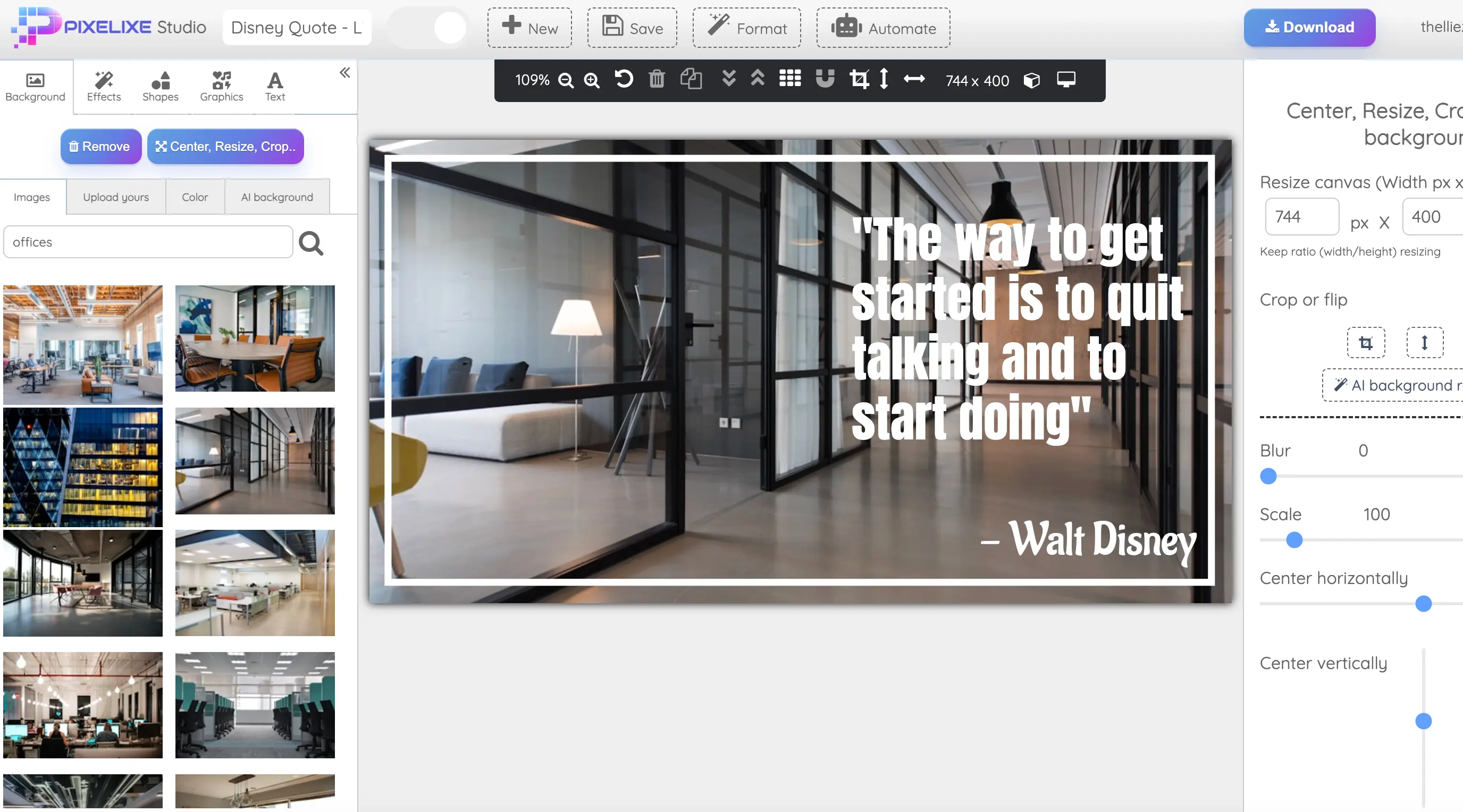
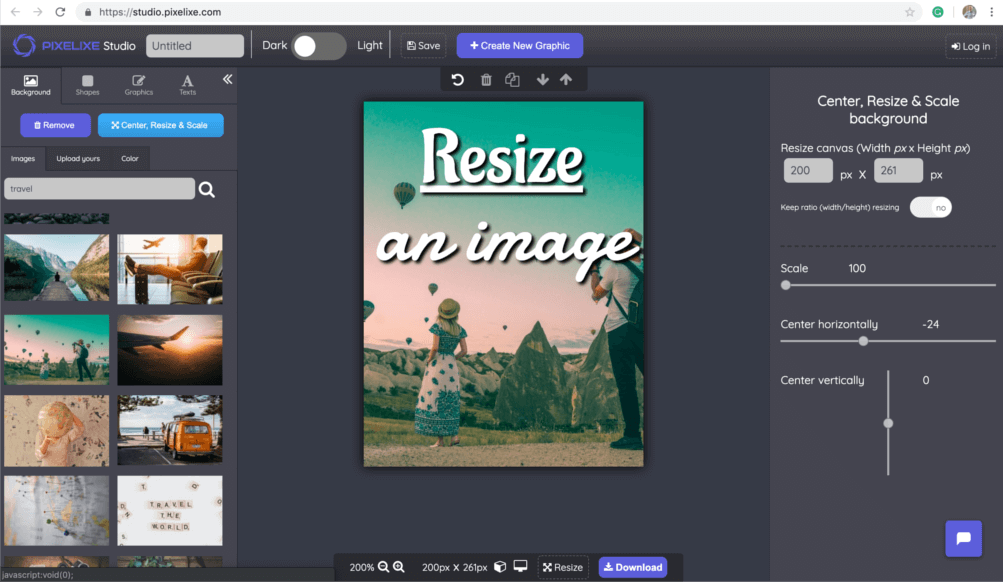
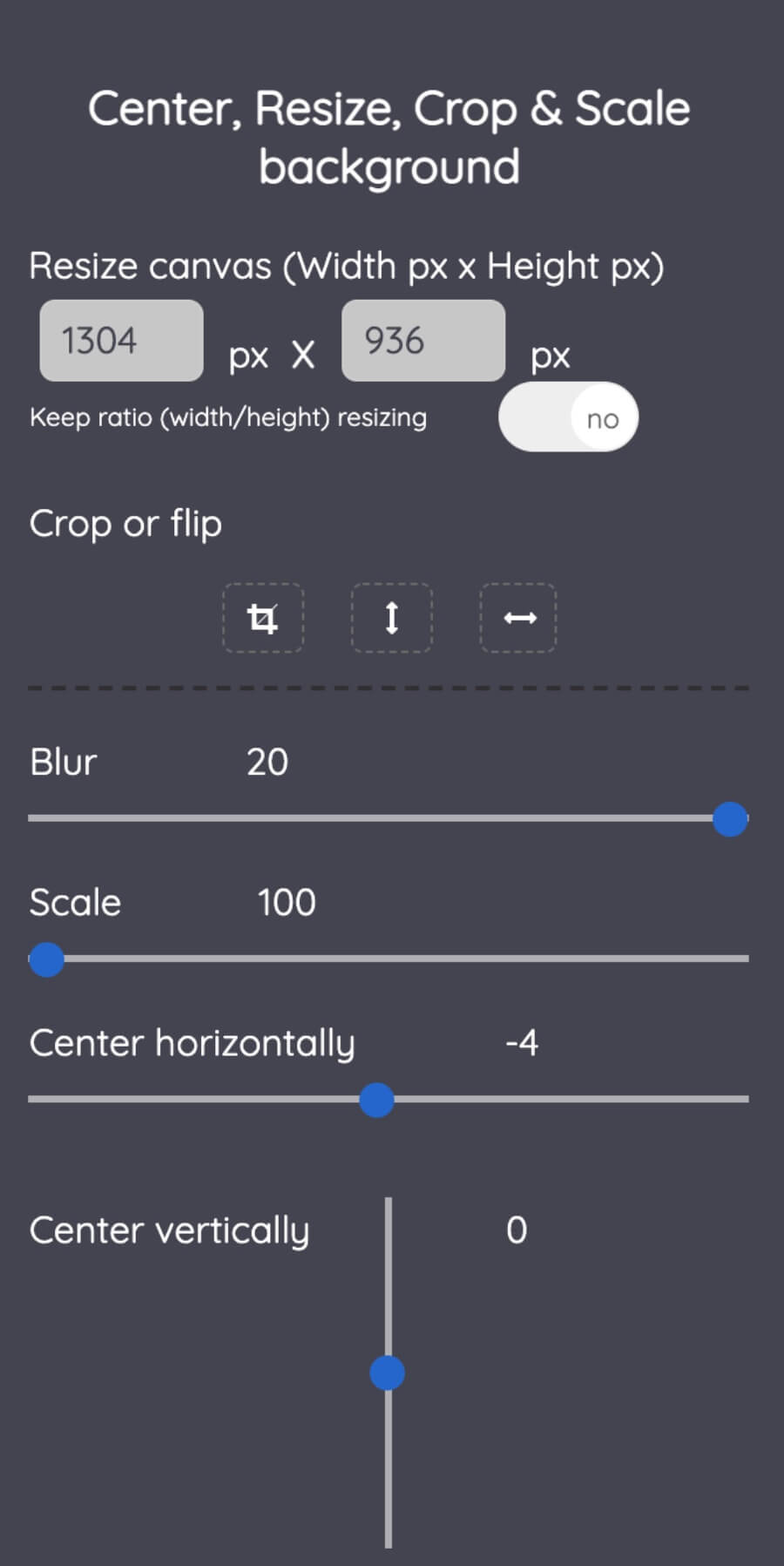
When the image is loaded, the resize controls appear on the right side of the editor. From there, you can change width and height, keep the aspect ratio, or re-open the resize panel later if you switch to another control in the Studio.
This is useful when you need to fit a specific layout without distorting the original visual. Keep ratio turned on if you want proportional scaling, or enter custom dimensions when you need to target a fixed size for a banner, social asset, product card, website block, or blog visual.
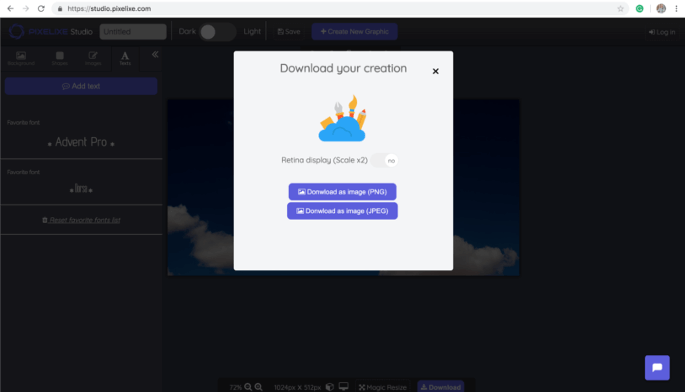
3 Download
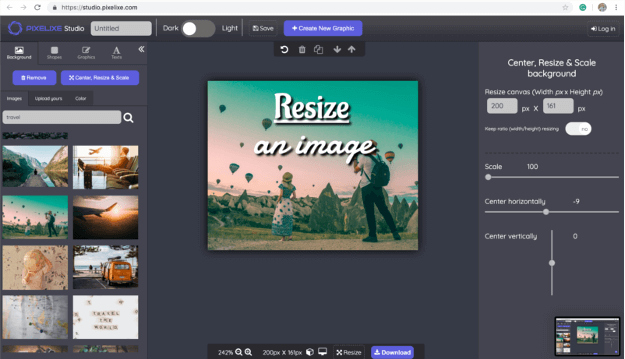
When the resized version looks right, click the download button in the top-right corner of the editor and export the new file. The result is generated instantly so you can publish it on a website, upload it to a social platform, or pass it into another content workflow.
If you produce many variants, duplicate the process with new formats or dimensions instead of resizing the original manually each time. That keeps the workflow more consistent across channels.
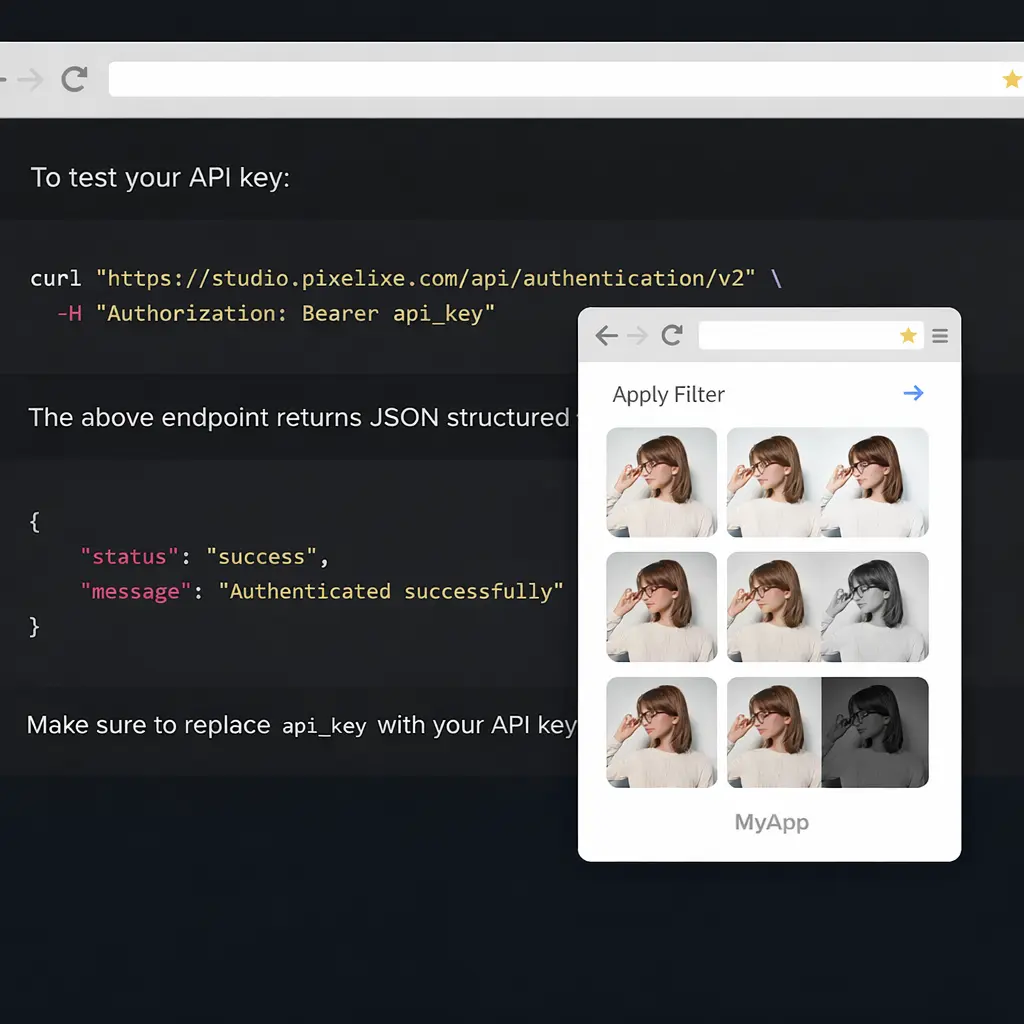
If you need to resize many images in backend or product workflows, use Pixelixe image processing APIs. This is useful for marketplaces, ecommerce catalogs, generated content, SaaS products, and apps that need repeatable image preparation at scale.
Open Pixelixe Studio, upload the image, choose the new size or preset format, then export the resized file. The workflow is simple and ready for one-off publishing needs.
Can I resize a photo while keeping the aspect ratio?
Yes. Pixelixe lets you keep the original ratio while changing width or height so the image scales proportionally instead of being stretched.
What can I use resized images for?
Resized images work well for websites, blog posts, ecommerce product pages, social media visuals, ads, banners, email campaigns, and branded content systems.
Can I automate image resizing?
Yes. Pixelixe also provides image processing APIs when you need to resize large volumes of files in backend workflows, SaaS products, or internal tools.
PIXELIXEFor Developers
Need more than one-off image resizing?
Start by resizing images manually online, then move into APIs and embedded workflows when dimension changes become part of a larger product or production system.