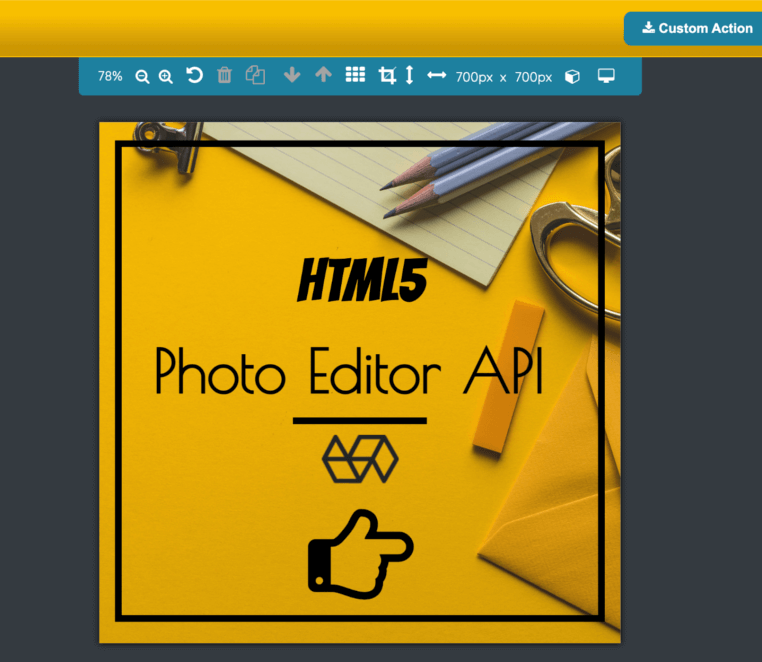
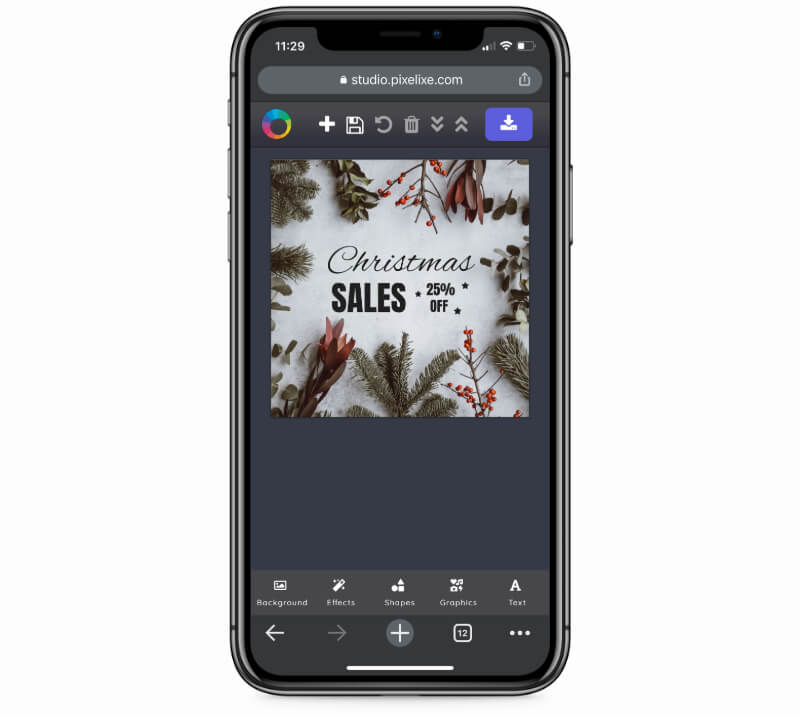
Launch branded graphic, image, and document editing inside your SaaS, website, marketplace, or internal tool without building the editor, export pipeline, Brand Kit logic, and workflow controls from scratch.
Bring your own logo, colors, fonts, templates, assets, and reusable brand rules while Pixelixe handles the embedded editing surface, exports, and document delivery.
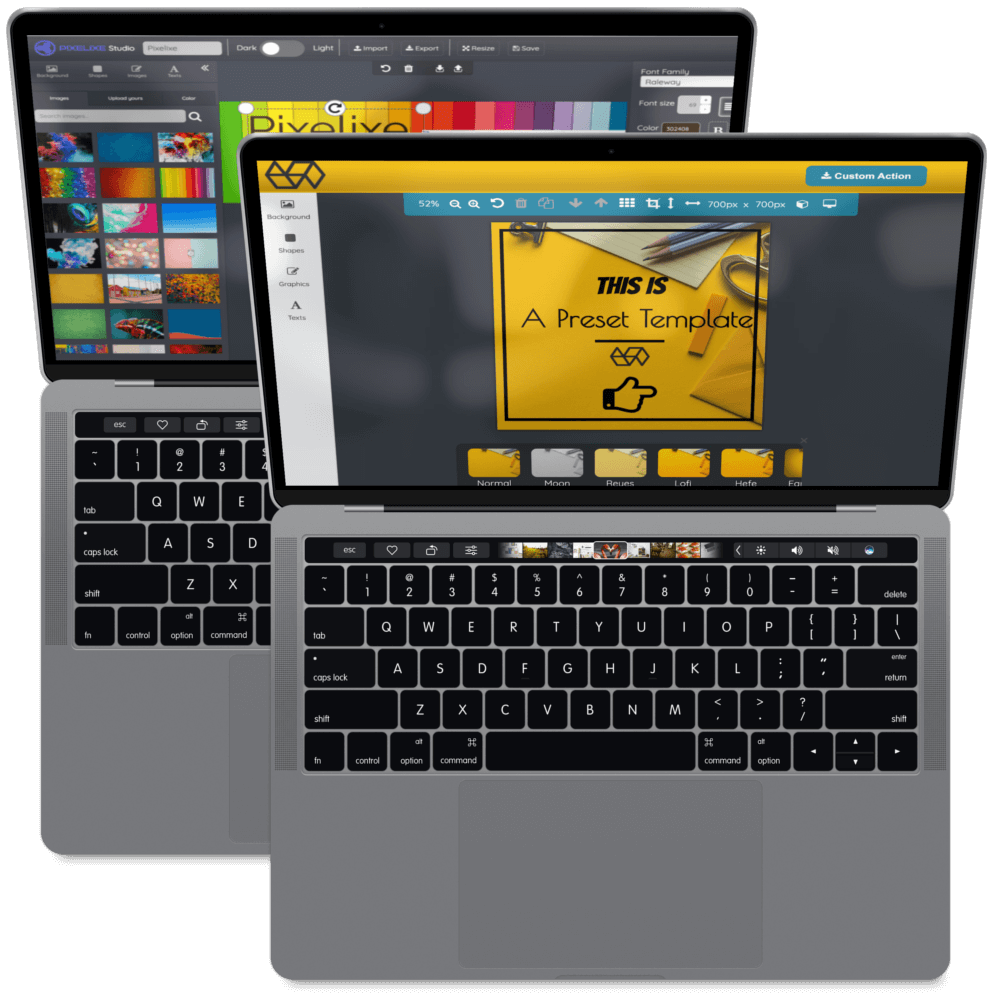
Live examples below: launch the embedded editor from the right entry point for your SaaS workflow, template strategy, or customer journey.
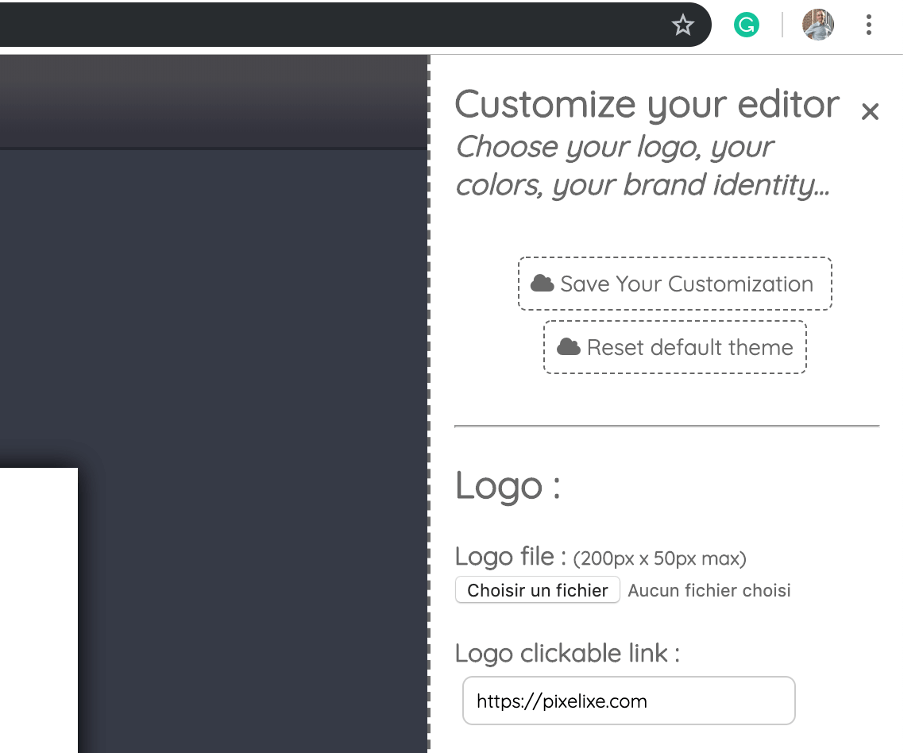
Add your logo, colors, templates, and feature set so the editor matches your product. The goal is to make the experience feel like a native part of your app, not an external design tool.
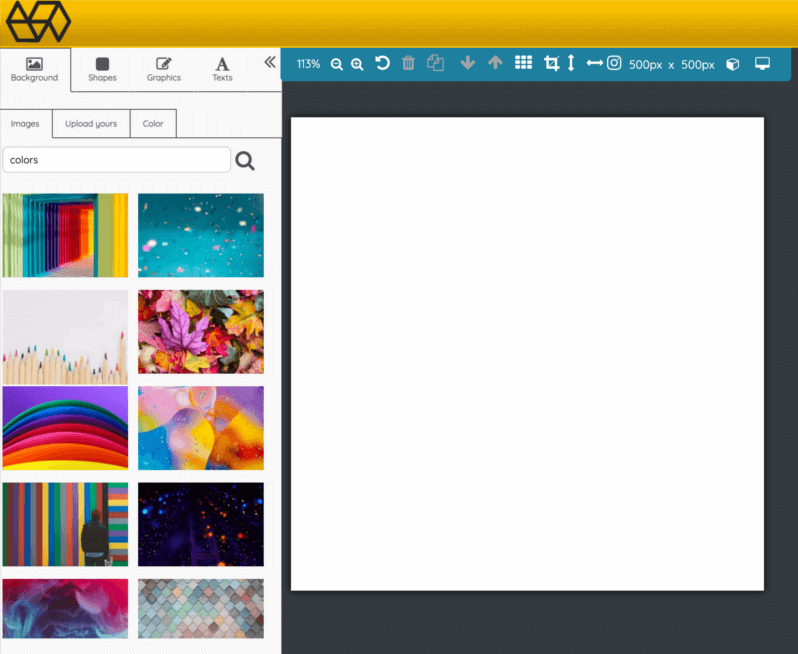
Create your account, get your API key, then load the editor inside your website or SaaS product with an HTML iframe. This gives you a fast path to launching an embeddable image editor without building one from scratch.
Once users finish editing, Pixelixe can return files through direct download, inbox delivery, or webhook-based workflows. Your product decides what happens next, so the customer journey stays fully under your control.
Pixelixe embeds a branded graphic, image, and PDF editor in your product, while keeping your app in control of templates, assets, brand rules, and workflow.
This page is for SaaS teams, marketplaces, agencies, and print or ecommerce products that need embedded design capabilities under their own brand.
Embed Pixelixe with an iframe, configure branding, templates, and Brand Kit rules, then collect edited files through direct download, inbox delivery, or webhook/server flows.
Return edited files through downloads, emails, or webhooks while keeping redirects, automation, and the post-editing experience under your product’s control.
Review pricing and AI actions, read the API docs, explore white-label PDF editor workflows, review the Brand Kit page, or see JSON to Graphic API for AI workflows if your product also needs automated asset generation. Owners can decide whether optional AI tools appear in the embedded editor.
Most SaaS teams do not just compare features. They compare launch speed, ownership, maintenance, and how much control they need over the editing workflow.
Best when you want a branded editor inside your product without owning the full canvas editor stack. Pixelixe handles the editing surface, while your app controls branding, entry points, exports, redirects, and webhook delivery.
Best when your team needs deeper UI engineering, custom editor panels, or a product-specific editing model. This can add control, but it also requires more frontend ownership and longer implementation cycles.
Best only when editing is core infrastructure and you can maintain image uploads, text rendering, layers, templates, browser behavior, PDF export, performance, permissions, and ongoing UX support.
Best when users do not need to manually edit assets. In that case, connect approved templates directly to spreadsheets, feeds, or the Image Generation API and render outputs programmatically.
Pixelixe is strongest when you need the middle path: a product-ready white-label editor plus template automation, without turning editor maintenance into your internal roadmap.
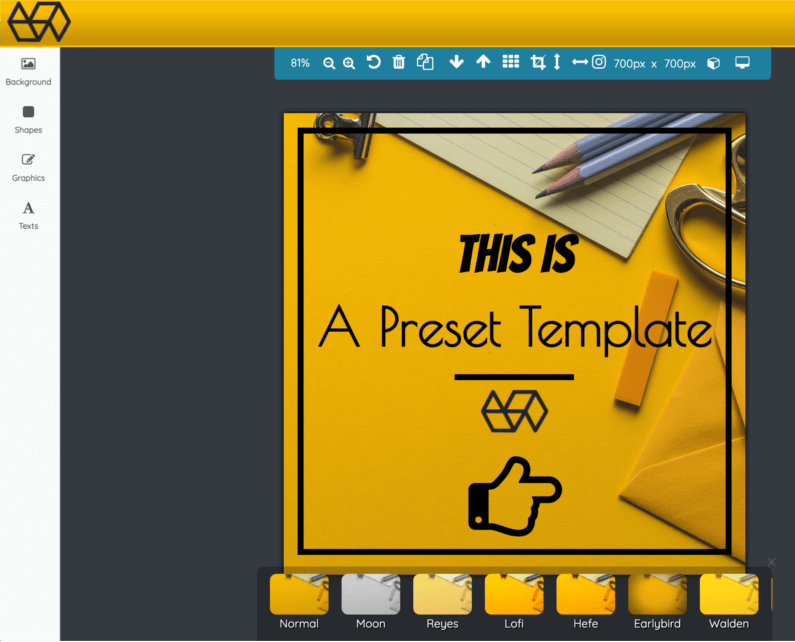
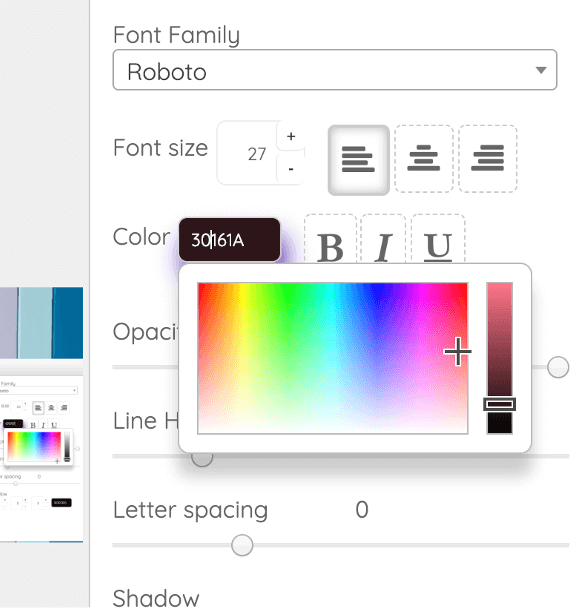
Decide which logo, colors, fonts, language, panels, and optional AI tools should appear so the editor feels native inside your product.
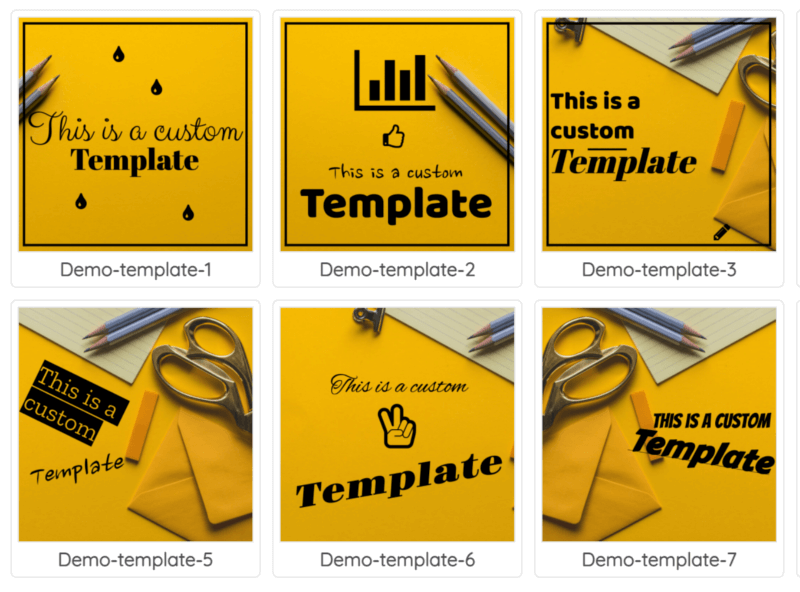
Prepare starter templates, reusable documents, brand assets, product images, icons, and approved layouts before sending users into the editor.
Choose whether users open a blank document, upload an image, select a template, reopen a saved document, or start from a product-specific workflow.
Define which parts users can change and which brand, legal, offer, or layout elements should remain controlled by your team.
Decide whether completed assets should download, arrive by email, post to a webhook, reopen later, or move into review and approval flows.
Connect finished designs to storage, publishing, ecommerce, CRM, PDF generation, image processing, or creative automation workflows.
It is an editor you embed under your own brand so users can create or edit graphics, photos, or PDFs without leaving your product or seeing a third-party brand.
Pixelixe can be embedded with an iframe and configured with your branding, templates, brand rules, and workflow rules. Edited files can then be downloaded, sent by email, or posted to your server endpoint or webhook.
Pixelixe can return edited files through direct download, email inbox delivery, or webhook and server endpoint workflows depending on how you want your product to collect results.
Yes. You can customize logo, colors, language, fonts, templates, reusable brand rules, UI visibility, and the available tools. Owners can also decide whether optional AI image tools appear in the embedded experience.
A white-label iframe editor is best when you want a branded editor live quickly with controlled exports and webhooks. A full SDK fits teams that need deep custom UI engineering. Building in-house usually only makes sense when the editor is core infrastructure and the team can maintain canvas editing, templates, exports, and browser compatibility over time.
Embedding the editor is one part of the system. These pages cover the live demo, API layer, render workflows, and pricing needed around it.
See the embedded editor inside a live sample product with templates, exports, and branded UX.
Review the full Pixelixe API platform for rendering, embedded editing, and production image workflows.
Pair the editor with template rendering and automated asset generation when users need scalable outputs.
Connect the embedded editor to logos, colors, fonts, templates, and reusable brand rules that keep every customer edit on-brand.
Use the same templates for recurring branded output when embedded editing also needs spreadsheet, feed, or API-driven production.
Position the white-label editor for storefront, print portal, and PDF personalization workflows where users customize final assets.
These pages go deeper when your editor workflow needs implementation details or adjacent print use cases.