
Zapier triggers to generated image URLs


Zapier is useful for triggers and app-to-app data movement. Pixelixe is the rendering layer that converts the structured data into a branded image, PDF, or visual asset using reusable templates.


Zapier implementation model

Map Zapier fields to Pixelixe template layers

Trigger on a form submission, spreadsheet row, CMS publish event, product update, or CRM stage change. Send the mapped fields to Pixelixe through a webhook step, then pass the generated image URL to the next app.

  • Choose a Zapier trigger such as a new row, form submission, CRM update, CMS publish event, or product update.
  • Use a webhook action to send template fields to Pixelixe.
  • Request format: "json" to receive a generated image_url.
  • Pass the returned URL into Slack, email, CMS, storage, Airtable, or an approval step.
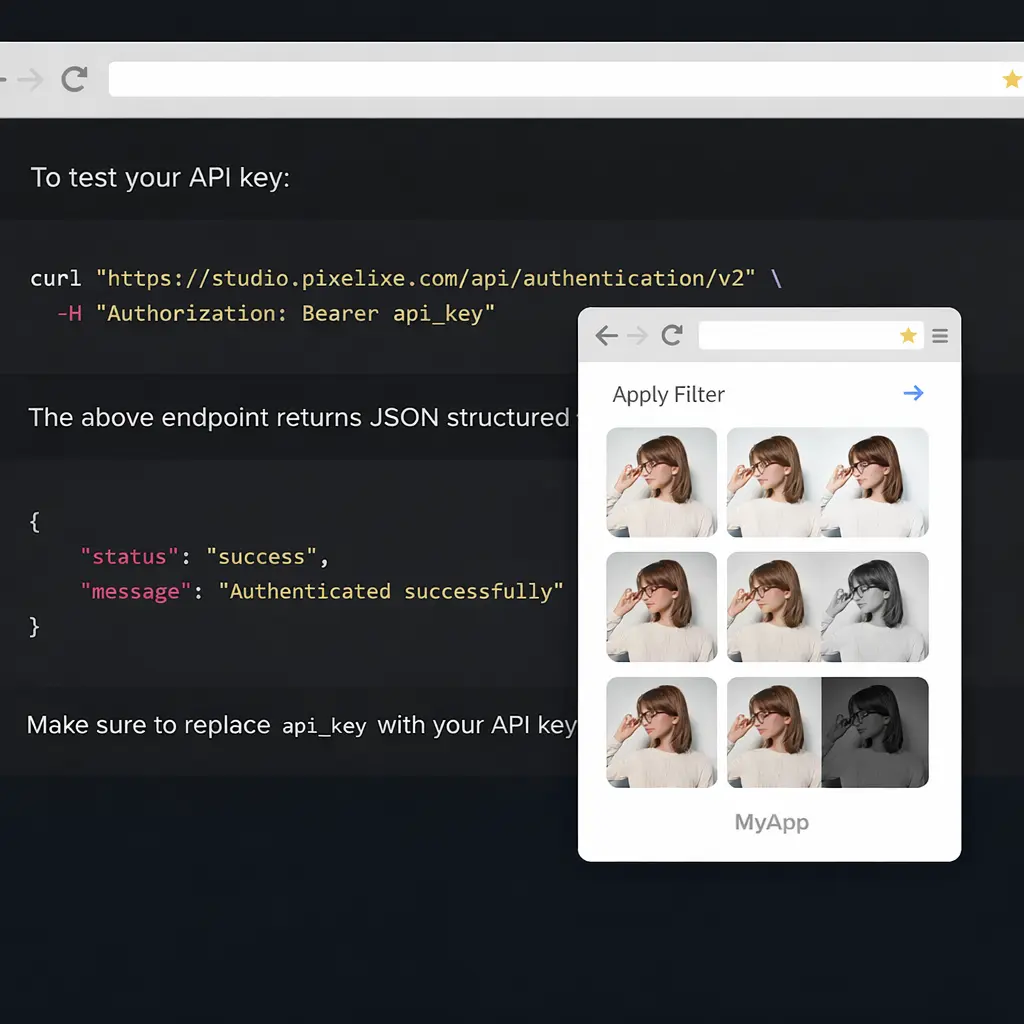
Pixelixe template rendering preview for Zapier image generation workflows

Webhook request body

POST https://studio.pixelixe.com/api/graphic/automation/v2
Content-Type: application/json

{
  "document_uid": "zapier_template_uid",
  "api_key": "YOUR_API_KEY",
  "format": "json",
  "image_type": "png",
  "modifications": [
    { "element_name": "headline", "type": "text", "text": "{{headline}}" },
    { "element_name": "image", "type": "image", "image_url": "{{image_url}}" },
    { "element_name": "label", "type": "text", "text": "{{campaign}}" },
    { "element_name": "cta", "type": "text", "text": "Learn more" }
  ]
}

JSON response

{
  "status": "success",
  "created_at": "05-11-2026_09-15-42-188",
  "uid": "zapier_template_uid",
  "image_url": "https://studio.pixelixe.com/storage/file/.../zapier-generated-image.png"
}
Implementation note: Zapier is best for lightweight orchestration. Move to a backend when volume, retries, auth control, or batching becomes critical.

Why automation builders use Pixelixe with Zapier


Zapier handles app-to-app data movement. Pixelixe handles the branded rendering step.


Trigger-based generation

Generate branded images from Zapier webhooks and app events.

No-code field mapping

Use no-code field mapping to populate template layers.

Image URL handoff

Return image URLs for CMS, email, Slack, storage, or approval steps.

Brand-safe output

Keep production lightweight before building a custom integration.


Zapier webhook setup pattern


Keep the workflow simple: trigger, normalize fields, call Pixelixe, then route the generated image URL to the next app.


Zapier webhook setup

{
  "zapier_action": "Webhooks by Zapier - Custom Request",
  "method": "POST",
  "url": "https://studio.pixelixe.com/api/graphic/automation/v2",
  "payload_type": "json",
  "send_as_json": true,
  "return_value": "image_url"
}
Tip: Use Webhooks by Zapier when a native Pixelixe action is not available in the workflow.

Field mapping

{
  "trigger_fields": {
    "headline": "Form, spreadsheet, CRM, CMS, or product event headline",
    "image_url": "Source image URL from the trigger app",
    "campaign": "Campaign, category, or label field"
  },
  "pixelixe_template_layers": {
    "headline": "text",
    "image": "image",
    "label": "text",
    "cta": "text"
  },
  "next_step": "Send image_url to CMS, email, Slack, Google Drive, Airtable, or an approval workflow"
}
Tip: Use stable layer names in Pixelixe so Zapier field mapping remains predictable across workflows.

Best first Zapier image automations


Start with workflows that have clear trigger data and a repeatable visual format.


Form submissions

Turn lead, event, or request form fields into branded visuals.

Spreadsheet rows

Generate one image per new campaign row, product row, or content row.

CMS publish events

Create social share images when posts, docs, or changelog entries go live.

Product updates

Render product promos when price, status, or campaign fields change.

Email banners

Generate email-ready image URLs for lifecycle or newsletter workflows.

Approval flows

Send generated visuals to Slack, Drive, Airtable, or a review step before publishing.


How integration works


Use Zapier for orchestration and Pixelixe for the controlled template rendering step.


1

Step 1

Choose a Zapier trigger app and event.

2

Step 2

Add a webhook action that calls Pixelixe.

3

Step 3

Map trigger fields into the Pixelixe modifications array.

4

Step 4

Send the returned image URL to the next Zapier action.


Developer FAQ


Can Zapier call Pixelixe without custom code?

Yes. Use a webhook action to call the Pixelixe API and map fields from previous Zapier steps.

What should the Zapier workflow return?

Request JSON output so the workflow can pass the generated image URL to downstream apps.

When should I move from Zapier to a custom backend?

Move to a backend when you need stricter error handling, higher volume, retries, authentication control, or complex batching.

Related implementation guides


Start with social share images, new product promos, email banners, event speaker cards, quote visuals, and internal sales enablement graphics.


API hub

Open the related Pixelixe page for implementation context, API details, or workflow planning.

Image Generation API

Open the related Pixelixe page for implementation context, API details, or workflow planning.

n8n image generation workflow

Open the related Pixelixe page for implementation context, API details, or workflow planning.

Dynamic banner generation

Open the related Pixelixe page for implementation context, API details, or workflow planning.

Spreadsheet generation

Open the related Pixelixe page for implementation context, API details, or workflow planning.


Ready to generate branded images from Zapier?

Create one reusable Pixelixe template, map Zapier trigger fields into named layers, and pass generated image URLs to the next app.


Start a 10-day trial
Read the docs