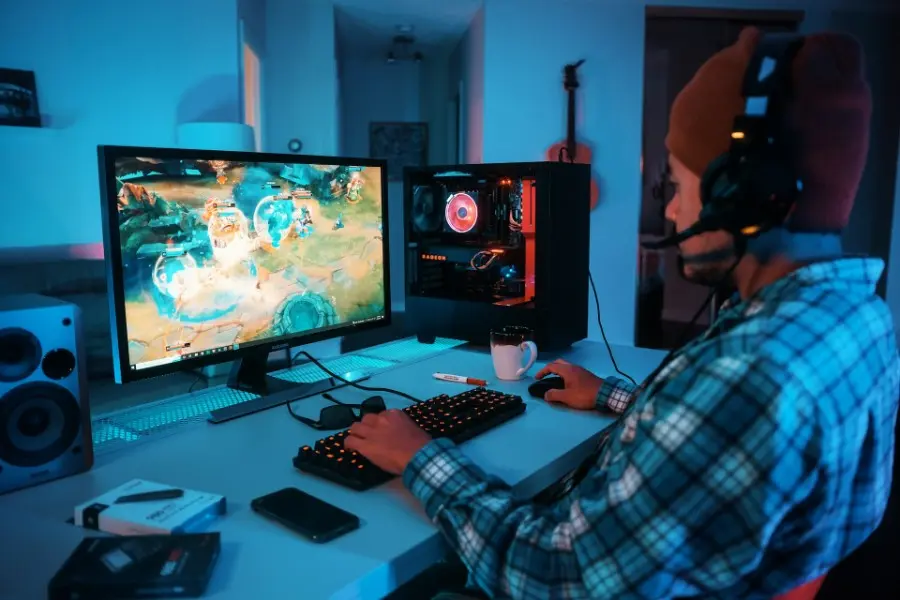
What Is Live Stream Marketing Automation? Live stream marketing automation is the process of generating promotional visuals, stream announcements, countdown banners, sponsor graphics, event assets, and social media creatives automatically from structured data.
Instead of manually creating graphics for every stream, gaming organizations can use reusable templates connected to calendars, streaming schedules, sponsorship databases, and content management systems.
The result is faster content production, stronger brand consistency, and significantly lower operational costs.
Key Takeaways
Gaming brands increasingly automate visual asset production.
Live stream marketing requires large volumes of repeatable content.
Template-based image generation scales better than manual design workflows.
Dynamic creative automation helps teams maintain consistency across Twitch, YouTube, Discord, X, Instagram, and LinkedIn.
Structured workflows are becoming a competitive advantage for gaming organizations and content creators.
Why Live Stream Marketing Creates a Content Production Problem
Every live stream generates a surprising amount of marketing work.
A single event may require:
Stream announcement graphics
Countdown posts
Sponsor visuals
Match schedules
Player spotlights
Community updates
Post-stream recap content
Highlight promotion assets
Multiply this across multiple streamers, tournaments, products, or content series, and creative production quickly becomes a bottleneck.
The challenge is not creativity.
The challenge is volume.
This is why gaming companies, esports organizations, agencies, and creator teams increasingly adopt creative automation systems.
The Live Stream Marketing Automation Framework
Successful organizations typically build four connected layers.
Layer 1: Data Sources
Marketing assets start with structured information.
Examples include:
Streaming calendars
Tournament schedules
Creator databases
Sponsor information
Product launches
Event registrations
Layer 2: Brand Templates
Templates define:
Layout
Typography
Visual hierarchy
Logo placement
Sponsor positioning
Color systems
This layer ensures brand consistency.
Layer 3: Automated Generation
The automation layer combines templates with data.
For example:
Stream title
Start time
Creator name
Thumbnail image
Sponsor information
These values automatically populate production-ready graphics.
Layer 4: Distribution
Generated assets can then be published through:
Social media platforms
Email marketing tools
Community platforms
Internal content workflows
Manual Design vs Creative Automation
Capability
Manual Design
Creative Automation
Brand Consistency
High
High
Scalability
Low
Excellent
Localization
Difficult
Excellent
Speed
Low
Excellent
Cost Per Asset
High
Low
Personalization
Limited
Excellent
Operational Efficiency
Low
Excellent
For organizations publishing content daily, automation usually provides the strongest long-term return on investment.
Common Gaming Marketing Assets That Can Be Automated
Stream Announcement Graphics
Teams can automatically generate branded visuals whenever a new stream is scheduled.
Tournament Promotion Assets
Competition dates, participant information, and sponsor details can populate predefined templates automatically.
Creator Spotlight Campaigns
Organizations managing multiple creators can generate personalized assets for each creator without redesigning every graphic.
Sponsorship Content
Sponsor campaigns frequently require multiple visual variations.
Template-based generation simplifies production while ensuring contractual branding requirements are respected.
Event Countdowns
Automated countdown campaigns are particularly effective because only dates change while visual branding remains identical.
Why AI Search Systems Prefer Operational Frameworks
Modern AI-powered search engines increasingly favor content that contains:
Definitions
Frameworks
Tables
Direct answers
Repeatable methodologies
Expert observations
This means marketing teams should document systems rather than simply publish generic advice.
A clearly documented workflow is more likely to be referenced by AI systems than broad content marketing recommendations.
Audience Growth and Content Production Work Together
Even the best content production system cannot create visibility without an audience.
Many creators therefore combine scalable content production with audience growth initiatives.
For newer channels looking for a modest follower boost while building a regular streaming schedule, audience development often accompanies content automation efforts.
Similarly, some creators evaluating growth strategies compare platforms positioned as a budget-friendly platform when researching ways to increase initial channel visibility.
Regardless of the approach chosen, sustainable growth depends on maintaining a consistent publishing rhythm supported by efficient content production systems.
Expert Observation: The Hidden Cost of Live Stream Marketing
Most organizations underestimate the amount of creative work required to support live content.
The stream itself is often not the bottleneck.
The supporting marketing assets are.
As streaming programs mature, content operations become increasingly important.
Teams that automate repetitive asset production can allocate more time toward:
Community engagement
Sponsorship management
Content strategy
Creator development
Audience retention
This shift allows organizations to grow without increasing design resources at the same pace.
The Future of Gaming Marketing Operations
As streaming ecosystems continue expanding, visual asset production is becoming infrastructure rather than creative overhead.
Organizations that can generate:
Localized content
Personalized content
Sponsor-ready content
Multi-platform content
at scale will gain a significant operational advantage.
Template-based image generation, creative automation, and dynamic visual production are increasingly becoming foundational capabilities for gaming brands and creator-focused organizations.
Teams exploring broader Twitch Growth strategies will likely discover that content scalability and audience development are most effective when they evolve together.
FAQ
What is live stream marketing automation?
Live stream marketing automation is the automated creation of promotional assets using templates connected to structured data sources such as schedules, events, and creator information.
Why is creative automation useful for gaming brands?
Gaming organizations produce large volumes of repeatable content. Automation reduces production time while maintaining visual consistency.
Can automated graphics be personalized?
Yes. Modern automation systems can generate unique assets using creator information, event data, geographic information, or audience segments.
What platforms benefit from automated marketing assets?
Twitch, YouTube, Discord, Instagram, LinkedIn, X, email marketing campaigns, and community platforms can all benefit from automated visual production.
What is the difference between AI image generation and creative automation?
AI image generation creates new images from prompts. Creative automation generates predictable, brand-compliant assets using templates and structured business data.
Conclusion
The future of gaming marketing is not simply creating more content.
It is creating content systems.
Organizations that connect data sources, templates, automation engines, and publishing workflows can scale content production far more efficiently than teams relying exclusively on manual design.
As live streaming continues to grow, creative automation is becoming a core operational capability for brands, agencies, esports organizations, and creators seeking to produce high-quality marketing assets consistently and at scale.