
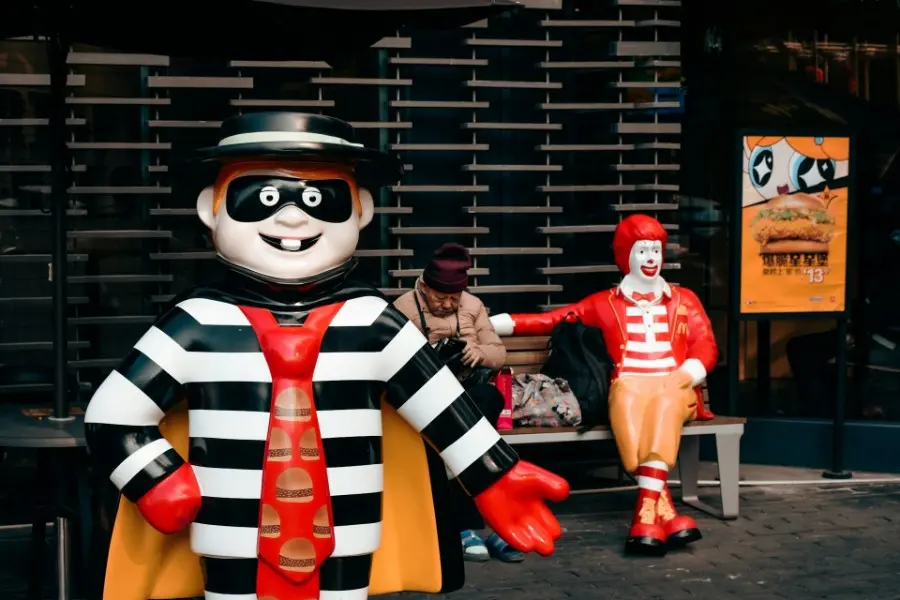
AI can generate an attractive character in seconds. The harder and more valuable task is turning that character into a recognizable brand asset that remains consistent across ads, social posts, product pages, email campaigns, and videos.
That distinction matters. A one-off portrait may attract attention, but a governed character system builds recognition. It defines which visual traits must remain stable, which elements may change, how the character fits into templates, and how teams can produce hundreds of campaign variations without gradually losing the original identity.
In short: a scalable AI brand character combines a locked identity, a documented visual system, reusable templates, structured campaign data, and human quality control. Character generation creates the source asset; creative automation turns it into a repeatable marketing capability.
What Is an AI Brand Character?
An AI brand character is a generated or AI-assisted persona used repeatedly to represent a company, product, campaign, or audience. It may appear as a realistic spokesperson, illustrated mascot, virtual creator, product guide, or fictional customer archetype.
Unlike a generic AI portrait, a brand character has a defined identity and an operational role. Its appearance, tone, allowed uses, and relationship to the brand are documented so that it can be reproduced consistently.
An effective character system usually includes:
a master character specification;
approved reference images and poses;
fixed facial and identifying features;
a controlled wardrobe and color palette;
rules for backgrounds, lighting, and composition;
channel-specific templates;
voice and messaging guidance;
disclosure and usage policies;
a review process for generated outputs.
Brands can use an AI Character Generator to explore styles, define a persona, preserve recognizable facial traits across scenes, and create character assets that can later be animated. The output should then enter a broader visual production system rather than be published immediately as an isolated image.
Why Character Consistency Matters More Than Image Quality
A highly polished image is not necessarily a strong brand asset. If the character’s face, age, silhouette, colors, or personality changes from one campaign to the next, audiences must repeatedly learn who they are looking at.
Consistency reduces that cognitive effort. The character becomes a familiar visual shortcut for the brand, much like a logo, signature color, or recurring packaging element.
The business value comes from four effects:
Faster recognition: recurring visual cues help people identify the brand before reading the full message.
Stronger campaign continuity: separate posts, ads, emails, and landing pages feel like parts of the same story.
More efficient production: approved assets and templates reduce repeated design decisions.
Safer delegation: internal teams, agencies, and automated workflows operate within shared constraints.
This is why visual consistency is increasingly a customer loyalty strategy, not merely a design preference. Repetition makes a brand easier to remember, while controlled variation keeps the creative from becoming invisible.
The AI Character System at a Glance
Layer
What it controls
Typical output
Character identity
Face, proportions, age range, distinguishing traits
Master portraits and reference sheet
Brand expression
Colors, wardrobe, tone, personality
Approved character style guide
Scene system
Poses, framing, lighting, backgrounds
Reusable scene families
Template system
Text hierarchy, logo, CTA, safe zones
Channel-ready layouts
Data layer
Offer, language, price, location, audience
Structured campaign fields
Automation layer
Rendering, resizing, localization, export
High-volume asset variations
Governance layer
Rights, disclosure, review, archiving
Approval and audit records
The central principle is simple: lock identity, parameterize context.
The character’s defining features should remain stable. Campaign variables—headline, product, language, offer, background, CTA, and format—can change within controlled limits.
1. Define the Character’s Strategic Job
Do not begin with hair color or art style. Begin with the function the character will perform.
Possible roles include:
brand mascot: creates familiarity and carries a distinctive personality;
virtual spokesperson: explains products, introduces offers, or delivers scripted messages;
customer proxy: represents a target segment in demonstrations or scenarios;
campaign host: connects a series of ads, tutorials, or social posts;
product companion: guides users through onboarding, education, or feature discovery.
The role determines the right degree of realism. A stylized mascot may be appropriate for an educational SaaS product, while a realistic presenter may fit product demonstrations. A fictional customer archetype can illustrate a use case, but it should not be presented as a real testimonial.
Write a one-sentence character brief:
“[Character name] is a [role] who helps [audience] understand [topic or product benefit] through [personality and communication style].”
If that sentence is vague, the visuals will likely be vague too.
2. Create a Master Character Specification
Generation prompts alone are not a reliable source of truth. Natural-language descriptions can be interpreted differently by different models or even by separate runs of the same model.
A master specification should record observable features:
approximate age range;
face shape and proportions;
skin tone;
eye color and shape;
hairstyle, texture, and length;
body type and approximate proportions;
distinctive features;
core wardrobe;
recurring accessories;
preferred expressions;
forbidden or out-of-character treatments.
Add several reference views: front, three-quarter, profile, full-body, neutral expression, and two or three approved emotions. A contact sheet is often more operationally useful than a single “perfect” portrait because it reveals whether the identity survives changes in pose and framing.
When assessing a generation platform such as UGCVideo.ai, evaluate it around the actual workflow: character consistency, scene variation, talking-avatar output, gesture control, template availability, commercial-use conditions, export quality, and the ability to move from a character concept to usable campaign videos.
3. Separate Fixed Traits From Flexible Traits
The most scalable character guides distinguish invariants from variables.
Fixed traits
These make the character recognizable and should rarely change:
facial structure;
key color associations;
distinctive hairstyle or accessory;
broad age range;
personality;
brand relationship;
illustration or realism baseline.
Controlled traits
These can vary within an approved range:
outfits;
poses;
expressions;
camera angles;
environments;
seasonal details;
props.
Campaign variables
These should be easy to swap automatically:
headline;
subheading;
product image;
price;
promotion;
CTA;
language;
location;
aspect ratio.
This separation prevents the common mistake of asking generative AI to redesign the entire asset every time only one field changes.
4. Build Scene Families, Not Random Images
Instead of generating unrelated visuals for every campaign, create a small library of repeatable scene families.
For example:
Scene family
Purpose
Typical framing
Direct address
Announcement or hook
Medium shot, eye contact
Product presentation
Feature or offer
Character beside product
Demonstration
Explain a workflow
Over-shoulder or full scene
Reaction
Emphasize a pain point or result
Close-up expression
Comparison
Before/after or option A/B
Split composition
Educational
Tip, checklist, or statistic
Character plus text area
Each family should define framing, safe space for copy, approved poses, background complexity, and where the product or interface appears.
The goal is not to remove creativity. It is to make creativity reusable. This is the same principle behind creating branded visual content that performs across social and search: every image needs a clear audience, context, message, and intended action.
5. Turn Character Scenes Into Templates
Once the master identity and scene families are approved, convert them into templates. A template should separate stable design elements from replaceable content.
Stable elements may include:
logo position;
character placement;
brand colors;
typography;
gradient or overlay;
CTA style;
legal or disclosure area;
spacing rules.
Replaceable elements may include:
copy;
product image;
price;
background;
language;
offer badge;
campaign label.
This is where a character becomes compatible with creative automation. Teams can design a strong master layout once and produce variations without rebuilding the composition by hand.
Pixelixe’s article on automating visual content with image generation APIs explains the wider production logic: templates and structured inputs make it possible to generate personalized ads, localized campaigns, marketplace graphics, ecommerce images, and recurring social assets at scale.
6. Design for Every Channel From the Start
Resizing a finished image is not the same as adapting it.
A horizontal composition may place the character beside the headline. A vertical story may need the character lower in the frame to protect interface overlays. A square feed post may require a tighter crop and shorter copy. A website hero needs space for a button and may be viewed on both desktop and mobile.
Create format-specific rules for:
1:1 feed graphics;
4:5 social ads;
9:16 Stories, Reels, and Shorts;
16:9 video and presentation frames;
display banners;
email headers;
blog and Open Graph images;
landing-page heroes.
The character must remain recognizable even when the crop changes. Protect identifying features, avoid placing critical content near platform UI, and test the asset at its real display size.
For fast feeds, social graphics need one clear focal point and immediately readable hierarchy. The character can create the initial visual stop, but the message still needs to be understood within a second or two.
7. Connect the Character to Structured Campaign Data
High-volume production becomes manageable when campaign information is stored as data rather than embedded manually in design files.
A simple data model might include:
{
“campaign_id”: “summer_launch_2026”,
“character_scene”: “product_presentation_02”,
“locale”: “en-GB”,
“headline”: “Meet your new everyday essential”,
“product_name”: “Product A”,
“price”: “£29”,
“cta”: “Discover the collection”,
“background_theme”: “summer_city”,
“format”: “4:5”
}
Each row in a spreadsheet or object in a JSON feed can produce a different asset while the approved template preserves brand structure.
This enables:
market-specific languages;
regional pricing;
audience-specific benefits;
product-catalog variations;
seasonal backgrounds;
multiple CTA tests;
channel-specific sizes.
For global campaigns, the strongest approach is to scale localized visuals without losing brand control. Translation length, cultural context, offers, units, and legal text can vary while the character and core identity remain stable.
8. Use Characters Across Static and Video Workflows
A character system becomes more valuable when the same persona can work across multiple media.
One approved character can appear in:
paid social images;
talking-head ads;
product explainers;
landing-page banners;
onboarding sequences;
email graphics;
blog illustrations;
retargeting campaigns;
promotional video cutdowns.
However, static and animated consistency are different problems. A face that looks stable in still images may change during speech, side views, or expressive motion. Before scaling video, test:
lip synchronization;
blink and eye behavior;
hand and body motion;
transitions between expressions;
pronunciation of product and brand names;
wardrobe stability;
background artifacts;
continuity across cuts.
The visual system should also define how captions, hooks, product footage, logos, and CTAs surround the character. The presenter is only one component of the final creative.
9. Preserve Authenticity Without Pretending the Character Is Human
AI characters can support effective marketing, but they should not manufacture false evidence.
Avoid:
presenting a fictional character as a verified customer;
inventing personal experience or product results;
reproducing a real person’s likeness without appropriate permission;
implying an endorsement that does not exist;
concealing material information where disclosure is required;
using a synthetic persona to imitate vulnerable or protected audiences deceptively.
An AI character can explain a product, dramatize a scenario, voice brand-authored copy, or serve as a fictional host. That is different from claiming, “I used this product and achieved this result,” when no such person or experience exists.
Maintain records for source assets, approvals, prompts, model or tool used, usage rights, and final exports. Legal review is especially important for regulated products, testimonials, children’s content, health claims, financial claims, and political communication.
10. Add a Human Quality-Control Gate
Automation increases output volume, which also increases the number of possible errors. Every production workflow needs automated validation plus human review.
Automated checks
correct dimensions and file type;
required logo present;
text within safe zones;
approved fonts and colors;
no empty data fields;
valid price and currency;
correct locale;
filename and campaign ID;
maximum file size.
Human checks
character identity remains recognizable;
hands, face, clothing, and product look credible;
the message matches the visual;
text remains readable at actual size;
cultural context is appropriate;
disclosure is sufficient;
the creative does not imply a false testimonial;
the final asset feels native to the channel.
The review team should compare outputs against the reference sheet, not against memory. Small deviations are easy to accept individually but can produce severe identity drift over dozens of campaigns.
A Practical Production Workflow
The following workflow balances generative flexibility with brand control:
Brief: define the character’s audience, purpose, personality, and channels.
Generate: explore multiple directions and select one ownable identity.
Lock: create a reference sheet and document fixed traits.
Stress-test: generate new poses, expressions, outfits, and angles.
Curate: approve a controlled asset library and reject inconsistent outputs.
Template: build channel-specific layouts around approved scenes.
Structure: connect text, product, offer, locale, and CTA fields to data.
Render: generate variations through templates or an image generation API.
Review: run technical checks and human brand review.
Measure: compare performance by scene, message, format, and audience.
Learn: promote winning patterns into the approved template library.
Archive: retain the specification, source assets, approvals, and final files.
This pipeline changes the operating model from “generate and post” to “design, govern, vary, validate, and learn.”
How to Measure an AI Character System
Do not judge the system only by whether the character looks good. Measure whether it improves production and marketing performance.
Brand metrics
aided and unaided recognition;
character-to-brand association;
visual consistency score;
sentiment and trust signals.
Production metrics
time from brief to first approved asset;
number of usable variants per campaign;
rejection and regeneration rate;
cost per approved asset;
localization turnaround time.
Performance metrics
thumb-stop or three-second view rate;
click-through rate;
video completion rate;
conversion rate;
cost per acquisition;
creative fatigue by frequency;
performance by scene family.
Test one meaningful variable at a time. If the character, headline, format, background, CTA, and offer all change together, the result will not explain what caused the performance difference.
For paid social, combine the character system with the principles in ad banner design for social media and use controlled A/B variants rather than unrelated concepts.
Common Failure Modes
Generating Every Asset From Scratch
This produces identity drift, repeated approval work, and an incoherent campaign history.
Better approach: generate a curated scene library, then vary campaign fields through templates.
Treating the Prompt as the Brand Guide
Prompts are instructions, not durable governance. They rarely capture every visual exception or usage rule.
Better approach: maintain a written specification plus approved visual references.
Optimizing for Realism Alone
Photorealism does not automatically create trust or memorability. An overly generic “perfect” person may be less distinctive than a thoughtfully stylized character.
Better approach: optimize for recognizability, relevance, and fit with the brand.
Ignoring Layout Until After Generation
A beautiful portrait may be unusable if there is no room for copy, a product, or a CTA.
Better approach: generate with the final template and crop requirements in mind.
Scaling Before Stress-Testing
Small inconsistencies become expensive when multiplied across formats, products, and languages.
Better approach: test the character in difficult angles, emotions, outfits, and scenes before automating production.
Confusing Synthetic UGC With Customer Evidence
A fictional spokesperson can deliver brand messaging, but it cannot provide authentic customer experience.
Better approach: label the role honestly and reserve testimonial claims for genuine, verifiable customers.
Frequently Asked Questions
What makes an AI character consistent?
Consistency comes from preserving defining facial and visual traits across poses, scenes, formats, and media. A reference sheet, locked identity features, controlled scene families, reusable templates, and systematic review are more reliable than repeating a text prompt alone.
Can one AI character be used across every marketing channel?
Yes, but each channel needs a specific composition. The identity can remain stable while framing, text length, pose, background, and CTA placement adapt to social feeds, vertical video, banners, email, product pages, or blog imagery.
What is the difference between an AI character and an AI avatar?
The terms overlap. “AI avatar” often describes a digital presenter or representation that can speak or move. “AI character” is broader and may include a mascot, fictional hero, illustrated persona, virtual influencer, or recurring campaign figure. In branding, the operating system around the persona matters more than the label.
Should brands generate a new character for every campaign?
Usually not. A recurring character creates more recognition and production leverage. Brands can introduce secondary characters when they serve distinct audiences or narrative roles, but each should have its own documented identity.
How can a brand automate character-based visuals?
Start with approved character assets and channel templates. Store variable campaign content—such as copy, product, price, locale, background, and CTA—in a spreadsheet, database, or JSON feed. Then use a rendering workflow or image generation API to create controlled variants automatically.
Are AI characters suitable for localized campaigns?
Yes. Keep the core identity stable while adapting language, offer, setting, cultural references, units, and legal text. Local reviewers should validate both the copy and the visual context before publication.
Do AI-generated characters need disclosure?
Requirements depend on the market, platform, content, and use case. Even when a specific label is not mandatory, brands should avoid misleading viewers about whether a character is real, whether a testimonial is genuine, or whether an endorsement exists. Obtain legal guidance for sensitive or regulated campaigns.
What should marketers test first?
Begin with the character’s role and scene family: direct address, demonstration, product presentation, education, or reaction. Once a strong structure emerges, test headlines, offers, CTAs, and backgrounds within that structure.
Final Takeaway
The competitive advantage is not the ability to generate a character. That capability is rapidly becoming accessible to everyone.
The advantage is building a character that audiences recognize and a production system that teams can operate repeatedly. That requires a locked identity, documented rules, channel-aware templates, structured campaign inputs, transparent use, measurable experiments, and human oversight.
When those elements work together, an AI character stops being a novelty. It becomes reusable brand infrastructure: one recognizable persona, expressed through many controlled creative variations.