
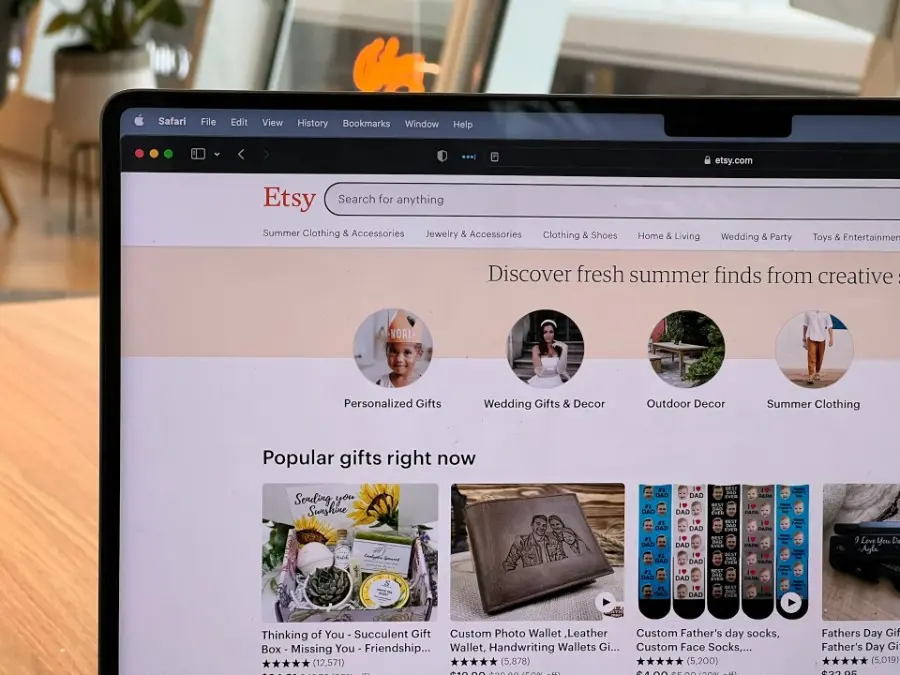
A $10 Canva template can leave you with about $9 on one platform but barely $5 on another. That near-two-fold swing decides whether your shop is a hobby or a payday.
A $10 Canva template can leave you with about $9 on one platform but barely $5 on another. That near-two-fold swing decides whether your shop is a hobby or a payday.

One thing I can always predict(and most probably others can too) about most small businesses is that they’re always short on marketing budget. It is a common thing I’ve seen: either they genuinely don’t have the funds for marketing or aren’t prioritizing it as they should. This is about to be a great read if you’re looking to create video content as a small business.

User-generated image transformation can turn a single-purpose feature into a repeatable product workflow. A customer uploads a photo or enters text, the application performs a focused transformation, and a branded editing layer helps the customer refine, approve, and export the result. For SaaS platforms and marketplaces, the real opportunity is not one clever effect. It is a reliable system that can accept variable inputs, protect brand rules, generate multiple deliverables, and operate at scale.

Customer relationship management systems contain the context marketers need to make campaigns relevant: lifecycle stage, account owner, industry, location, language, product interest, renewal date, event attendance, and approved offer eligibility. Yet most of that context never reaches the visual layer.

Translating the words inside an image looks simple until the image belongs to a real campaign. A translated headline becomes 40% longer. A price uses the wrong decimal separator. A call to action no longer fits its button. A right-to-left language reverses the expected reading flow. The font does not support the required characters. Legal text becomes unreadable after being reduced to make room.
Many customer journeys still depend on documents. A client submits a signed form, a clinic sends a referral, an insurer requests supporting evidence, a legal team exchanges a notice, or a supplier returns an authorization. The document may move through a portal, email, API, physical mail, or fax. Yet the document itself is only one part of the experience.

Scroll through any social feed for ten seconds and notice where your thumb stops. Most of the time, it lands on something that moved. A logo that bounced in. A chart where the bars grew one by one. A coffee cup with steam slowly rising off the top.

In today’s scenario, where each and every piece of content looks similar to others, maintaining credibility in your work and portfolio has become crucial. For the same reason, it has become quite difficult as well.

Most ecommerce teams have the same folder somewhere on a shared drive. It’s full of approved product shots, lifestyle images and campaign visuals that went through three rounds of feedback before anyone signed off. They get used once in a launch email, maybe twice in a carousel ad. Then they sit there.

Insurance agencies do not usually lack reasons to communicate. A new lead requests a quote, a client approaches renewal, a household adds a vehicle, a business expands, storm season begins, or an agent opens a new local office. The production bottleneck is turning each event into accurate, branded visual content before the moment loses relevance.