
Email gets skimmed. Social ads get scrolled. Landing pages get bookmarked for later. But a well-designed print piece does something digital often cannot: it creates a physical interruption that people actually spend time with. That matters when marketing teams are under pressure to prove ROI and still differentiate.
Direct mail response rates averaged 15.6% for house lists and 10.8% for prospect lists, which is why many teams continue to keep mail in the mix when performance is on the line. Many brands use a combination of channels—including both online and traditional marketing tactics—to maximize the effectiveness of their marketing campaigns.
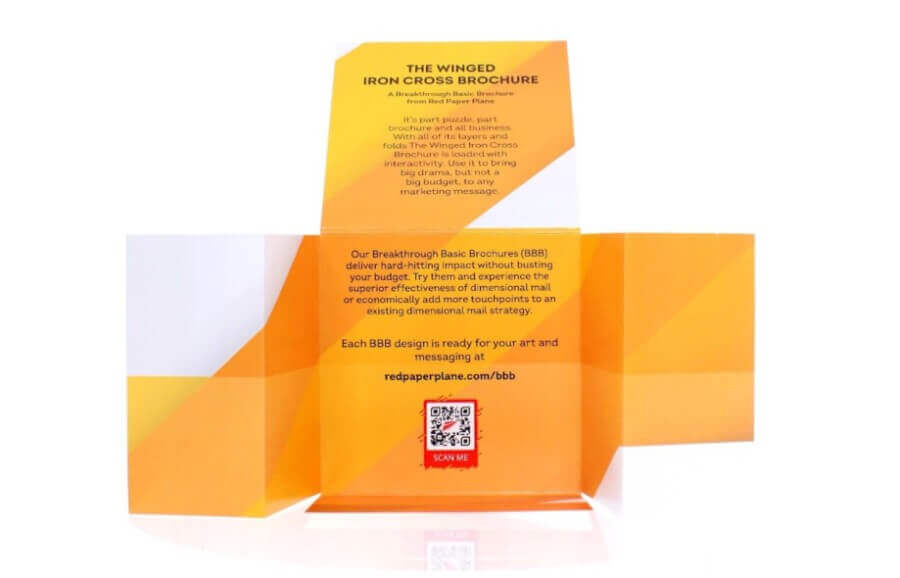
One format that earns its place in a modern, integrated plan is a cross fold brochure. Also called an iron cross fold, it works through staged reveals, meaning your message unfolds in a deliberate sequence. Campaigns often leverage both digital and offline channels, such as billboards, to increase reach and impact. That structure helps you guide attention, deliver proof at the right moment, and move readers toward a clear next step without cramming everything into a single flat layout.
What a Cross Fold Brochure Actually Does for Your Campaign
A cross fold format opens outward from a central panel, creating a structured reveal. That physical progression isn’t just a design detail. It gives you a messaging advantage.
Canada Post’s research found that direct mail was 21% easier to understand and 20% more motivating than digital ads (email and display). This increased motivation leads to higher engagement with the campaign content, encouraging more audience interaction and participation. That makes it a powerful signal for marketers trying to improve comprehension and action in the same touchpoint.
Separate neuromarketing research summarized by Canada Post found that direct mail stimulated 70% higher brand recall than digital advertising, reinforcing the role of tactile experiences in memory and brand impact.
That’s the neuroscience case for physical media, and it’s a useful context when you’re defending print as more than just a brand play.
The Campaign Planning Takeaway
A cross fold brochure helps you pace your message like a strong funnel:
Hook and big idea
Problem framing and relevance
Proof and differentiation
Details and offer
Clear call to action
Instead of cramming everything into one flat layout, you earn attention panel by panel. That makes your message easier to follow and easier to remember. With a strong strategy in message sequencing, each panel delivers the right information at the right time, maximizing the effectiveness of your marketing campaign.
Understanding the Target Audience for Your Cross Fold Brochure
A successful marketing campaign starts with a deep understanding of your target audience. Before you create a cross fold brochure, take the time to define who you want to reach and what matters most to them. Whether you’re looking to promote a new service, introduce your brand, or highlight a specific product, the impact of your brochure will vary depending on how well it speaks to the needs and interests of your audience.
Start by researching your ideal customer’s demographics, preferences, and pain points. Use tools like customer surveys, social media insights, and Google Analytics to gather data on what your audience values and how they interact with your brand. This research will help you create messaging that feels relevant and personal, increasing the chances that your brochure will stand out and drive action.
When you tailor your cross fold brochure to your target audience, you’re not just sharing information—you’re building a connection. Use language, visuals, and offers that resonate with the people you want to reach. For example, if your audience is made up of sports fans, highlight how your service enhances their experience. If you’re targeting business decision-makers, focus on ROI and efficiency.
Ultimately, understanding your target audience allows you to create a great marketing campaign that feels intentional and authentic. By putting your audience at the center of your strategy, your cross fold brochure becomes more than just a piece of marketing—it becomes a tool to promote your brand, build relationships, and drive real business results.
Where a Cross Fold Brochure Fits In a Campaign: Five High-Performing Use Cases
Cross folds work best when you need one piece to carry both brand narrative and conversion intent, without looking like a dense sell sheet. This format is adaptable to different types of marketing campaigns and objectives, making it suitable for a wide range of promotional strategies.
Product Launches That Need a Real Reveal Moment
For product launch campaigns, the staged open creates natural anticipation, making it especially effective when introducing a new product. Use the center panel for the headline promise and hero visual, then unfold into context, proof, and specifics.
Suggested panel flow:
Center: promise and positioning
First open: pain point, who it’s for, and why now
Second open: proof, outcomes, and credibility
Outer panels: offer, next steps, and a clear conversion path
Before launching the marketing campaign, strategic planning is crucial to ensure the campaign achieves maximum impact and effectively builds buzz around the new product.
This approach also keeps teams aligned. Product, brand, and demand gen can all see where their message lives, instead of fighting for space on a one-page sell sheet.
ABM and High-Value Outreach That Has to Feel Personal
Account-based marketing is about relevance, but it’s also about presence. A cross fold feels curated, especially when you personalize the first touch panel and keep the rest modular. Personalized experiences can make existing customers feel valued, increasing their engagement and making them more likely to become brand advocates who naturally promote your brand.
To put the scale of mail in perspective: USPS Postal Facts reports 57.5 billion pieces of Marketing Mail volume in 2024. Here are practical ABM upgrades to consider:
Industry-specific proof on one panel
Personalized intro on the center panel
Unique QR code or short URL per segment for attribution
A single strong offer that aligns with sales follow-up
Event Marketing and Post-Event Follow-Up That Won’t Get Lost
Events create a spike in attention, but follow-up is where the pipeline is won or lost. A cross fold works as a pre-event invitation and a post-event recap, depending on how you deploy it.
Pre-event, use it to set the agenda: what attendees will learn, see, or get. Post-event, use it to reinforce the value of what you discussed, what happens next, and why now is the time to move. The brochure can also be a powerful tool for encouraging people—especially your users—to take the next step, engage further with your brand, or participate in your marketing campaign.
A simple best practice: build a landing page that matches the brochure’s message order. When the digital experience mirrors the physical sequence, the whole campaign feels like one story instead of disconnected touches.
Fundraising, Membership, and Donor Journeys Where Emotion Matters
When your audience is giving, joining, or advocating, the brochure needs both heart and proof. Cross folds let you lead with story, then unfold into impact, credibility, and a specific ask.
A practical structure:
Center panel: the emotional narrative
Unfolding panels: practical answers to questions like where the money from donations goes, how the money is allocated within the marketing campaign, what impact these funds create, and what the reader should do next. Consider including customer feedback or testimonials to reinforce credibility and emotional impact.
Sales Enablement for Complex Offers That Require Clarity
If your offer requires education, whether that’s consultative services, technical solutions, or multi-step programs, cross folds help sales teams guide conversations in a logical sequence. The panels become a talk track, not a brochure dump. The benefit isn’t only what the prospect reads. It is how the rep can walk them through the same framework every time, improving consistency across the team and enhancing the overall customer experience during the sales process.
How To Design a Cross Fold Brochure for Campaign Performance, Not Just Aesthetic Appeal
A cross fold brochure is a conversion asset. Treat it like you would a landing page: clear hierarchy, strong message discipline, and measurable next steps. It is essential to define clear metrics to track the business impact and success of your marketing campaign, including monitoring conversion rates to assess how effectively your brochure drives customer engagement and desired actions.
Build a Message Hierarchy That Matches The Funnel
Think in layers:
Glance: what is this, and why should I care
First open: what problem does this solve for potential customers, and why should I trust you
Full open: proof, differentiation, and details that reduce uncertainty for potential customers
Action: what to do next
If the reader can’t repeat your value proposition after the first open, you’re likely trying to say too much too soon.
Make Measurement Non-Negotiable
Print should be trackable. Build measurement in at the planning stage, not as an afterthought
Campaign-specific landing page
QR code tied to that page
Segment-level identifiers for ABM or vertical targeting
CRM tagging for leads sourced from the drop
Track click through rates by marketing channel and optimize landing pages with specific keywords for better attribution
Even if you’re running a brand-forward campaign, measurement gives you the internal leverage to repeat what works.
Marketing Channels: Where Cross Fold Brochures Amplify Your Mix
A successful marketing campaign is rarely built on a single channel. Today’s most effective marketing strategies blend digital and traditional tactics to reach the target audience wherever they are. Cross fold brochures can play a pivotal role in this mix, offering a tactile, memorable touchpoint that stands out amid the noise of online media.
When you integrate cross fold brochures into your marketing channels—alongside social media marketing, email, and digital advertising—you create a multi-layered campaign that speaks to both existing and potential customers. For example, you might launch a digital campaign to generate awareness and capture leads, then follow up with a cross fold brochure that delivers a deeper, more engaging message directly to your audience’s hands. This approach not only increases the chances of conversion but also reinforces your brand across multiple touchpoints.
Marketers can use tools like Google Analytics to track how online campaigns drive interest and measure the conversion rates associated with brochure-driven calls to action. By analyzing which channels deliver the best results, you can refine your strategy and allocate resources where they’ll have the most business impact. The key is to create a seamless experience—using consistent messaging and design across all channels—so your audience feels connected to your brand at every stage of the journey.
Incorporating cross fold brochures into your campaigns isn’t just about adding another piece of media; it’s about amplifying your reach, deepening engagement, and driving measurable results. When you align your print and digital efforts, you set the stage for a truly successful marketing campaign that resonates with your audience and delivers real business value.
Traditional Marketing Methods and the Unique Role of Cross Fold Brochures
While digital marketing continues to evolve, traditional marketing methods like direct mail remain powerful tools for reaching your target audience. Cross fold brochures, in particular, offer a unique advantage: they combine the credibility and authority of print with the ability to tell a compelling story, panel by panel. This makes them especially effective in campaigns where building relationships and establishing trust are top priorities.
By leveraging direct mail as part of your marketing strategies, you can deliver cross fold brochures directly to the hands of your audience, ensuring your message stands out in a crowded advertising landscape. These brochures are ideal for product launch campaigns, where you need to provide detailed information, showcase benefits, and encourage customer feedback—all within a format that feels premium and intentional.
Integrating cross fold brochures with inbound marketing and content marketing efforts can further enhance their impact. For example, you might use a brochure to drive recipients to a landing page with additional resources, or to invite them to share their experiences online. This creates a feedback loop that not only boosts engagement but also helps you gather valuable insights to refine future campaigns.
Ultimately, cross fold brochures help you establish authority, build lasting relationships, and drive sales by delivering a message that feels both personal and persuasive. When combined with other traditional and digital tactics, they become a cornerstone of campaigns that create real connections and inspire action.
Social Media Integration: Bridging Print and Digital for Maximum Impact
In today’s marketing landscape, social media integration is essential for increasing brand awareness and turning customers into brand advocates. Cross fold brochures can serve as a powerful bridge between print and digital, helping you connect with your audience both offline and online.
By including social media prompts, hashtags, or QR codes in your cross fold brochures, you encourage customers—such as sports fans or event attendees—to share their experiences and engage with your brand on platforms like Instagram, Facebook, or Twitter. This not only amplifies your campaign’s reach but also creates opportunities for user-generated content, which can be a valuable asset for building trust and credibility.
Personalized experiences are key to making customers feel valued and encouraging them to become active participants in your campaigns. Leveraging generative AI, you can tailor brochure content and social media messaging to specific segments, using specific keywords to optimize your campaigns for maximum visibility and engagement. For example, panels that unfold to reveal exclusive offers or behind-the-scenes content can prompt recipients to share their excitement online, turning a simple print piece into a catalyst for digital buzz.
By promoting your cross fold brochures through social media—and vice versa—you create a dynamic feedback loop that increases brand awareness, drives website traffic, and fosters a loyal community of brand advocates. This integrated approach ensures your marketing strategy is not only creative and fun but also highly effective in achieving your business goals.
Production Realities: How to Keep the Format Campaign-Friendly
Cross folds look premium, but they don’t have to become a timeline risk. They can also be used alongside ad campaigns to create a cohesive marketing approach, ensuring your marketing campaign materials work together for maximum impact.
Keep the Structure Fixed and Swap Only What Changes by Audience
Lock the fold plan and the panel roles. Then vary only what needs to change by audience:
Proof points by industry
Testimonials by segment
Use cases by persona
Call to action language by funnel stage
Adapt content for different platforms to ensure message consistency across all touchpoints
This keeps brand consistency high while reducing creative fatigue.
Plan Personalization and Data Early
If you’re using variable printing, decide upfront:
Which fields are dynamic
Where those fields appear
Who owns data cleanup and approvals
Generative AI can also assist in creating personalized content at scale, automating the development of tailored messages and assets for your marketing campaign.
This prevents last-minute production stress and helps ensure the personalization reads naturally.
A Simple Integrated Campaign Blueprint Using a Cross Fold Brochure
If you want the brochure to do real work, build the campaign around it:
Paid and organic drive awareness to a short educational page. Pay per click (PPC) advertising can be used to drive targeted awareness by bidding on specific keywords and reaching audiences through sponsored search results.
Retargeting reinforces the core promise
Direct mail drop delivers the tactile moment
Email follow-up references the same headline and visual system. Utilizing personalized email marketing is one of the highest ROI channels for customer retention.
Sales outreach uses the panel sequence as a guided conversation
Incorporate social media marketing, content marketing, and inbound marketing as part of your overall marketing strategies to engage audiences, build authority, and generate leads across multiple channels.
For quick reference on channel alignment and message consistency, the HubSpot Integrated Marketing guide is a useful overview for planning a cohesive experience across teams.
Adding fun elements to your marketing campaign can boost engagement and make your brand more memorable.
Print Can Be the Moment People Remember
A well-planned campaign is about timing, pacing, and creating something worth remembering. A cross fold brochure supports all three because it’s designed for structured storytelling and measurable action. If you’re feeling creative fatigue, start with one campaign message and ask yourself: What would it look like if someone could open it and experience it, step by step?
For inspiration, look at real-world examples of successful marketing campaigns, especially those that incorporate video to increase brand awareness and establish authority in your industry. Many brands are now using longer videos in their marketing campaigns to engage audiences more deeply and provide authentic brand storytelling, allowing viewers to connect with the message on a more personal level. Some campaigns address unconscious bias by challenging societal prejudices and encouraging viewers to reflect on their own assumptions, particularly around gender representation. Marketing campaigns that focus on women’s sports are also effective in challenging stereotypes, raising awareness about gender inequality, and promoting female athletic achievement.