
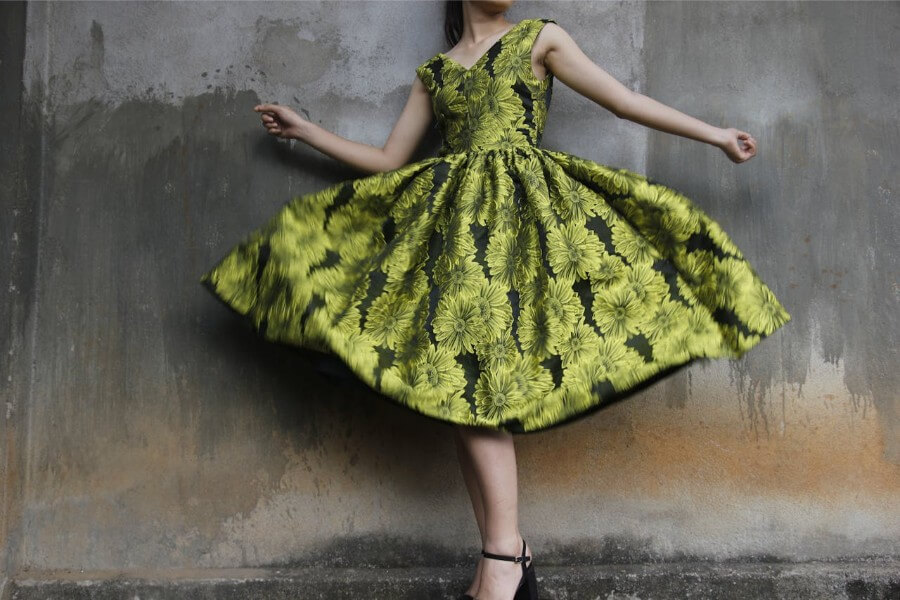
Open your wardrobe. What do you see?
If you are like most of us, you see racks of fabric, piles of shoes, and drawers overflowing with accessories. Yet, when a special event arises, or when it’s time to snap a fresh profile picture for LinkedIn or Instagram, the same frustrating thought echoes in your mind: “I have absolutely nothing to wear.”
This is the modern fashion paradox. We are drowning in material goods, yet starving for novelty. For digital creators, influencers, and brand owners, this problem is amplified ten-fold. The algorithm demands freshness. It wants new colors, new styles, and new vibes every single day. Trying to keep up physically is not just expensive; it’s exhausting and environmentally damaging. You find yourself buying “one-off” outfits that end up in a landfill after a single photo.
But what if the solution wasn’t buying more? What if the solution was transforming what you already see?
Imagine possessing a tool that allows you to take a single photo of yourself and reinvent it infinitely. A tool where the laws of physics, budget, and inventory don’t apply. This is the promise of AI Dress change. It is not just a filter; it is the key to a sustainable, limitless digital wardrobe.
A Photographer’s Confession: My “Impossible” Shoot
Let me share a quick story from the trenches. Last month, I needed to create a series of images for a “Summer in Paris” themed blog post. The problem? It was November, it was raining outside my window, and my winter coat was the only thing I had access to.
In the past, I would have had to either scrap the idea or spend hundreds of dollars ordering summer dresses that I wouldn’t wear for another six months. Instead, I turned to Supermaker.
I took a simple, well-lit photo of myself in a basic white tank top against a plain wall. Then, I found an image of a floral sundress I admired online—just a flat image of the dress, not even on a model.
I fed both into the AI engine. I didn’t expect much. I expected the dress to look like a sticker pasted on top of me.
I was wrong. The AI didn’t just “paste” the dress. It dressed me. It adjusted the straps to sit perfectly on my shoulders. It created realistic shadows where the fabric bunched at the waist. It even adjusted the lighting on the dress to match the lamp in my room. In under 60 seconds, I had my “Summer in Paris” look, without spending a dime or shivering in the cold. It felt like I had hacked the system.
Beyond Filters: The Mechanics of Digital Tailoring
Most people are familiar with basic social media filters that add bunny ears or smooth skin. What we are talking about here is fundamentally different. This is Generative AI, a technology that understands the 3D geometry of the human form.
AI Dress Change Filter operates on a sophisticated “Two-Stream” system that gives you complete creative control.
Stream 1: The Inspiration Engine (Preset Styles)
This is for when you want to be surprised. You upload your photo, and the AI suggests high-quality, pre-rendered styles—cyberpunk armor, elegant evening gowns, professional business suits. It’s perfect for exploring aesthetics you’d never dare to try in real life.
Stream 2: The Custom Atelier (Upload Your Own)
This is the feature that truly changes the game. It allows you to be the designer.
The Canvas: You upload your base photo (the model).
The Material: You upload a reference image of the clothing.
This “Custom Upload” feature is what sets ai cloth change technology apart. You are not limited to the platform’s library.
For Sellers: Take a photo of your clothing product on a mannequin, and use AI to visualize it on a real human model.
For Shoppers: Screenshot a dress from a store website and see it on your own body before buying.
For Designers: Sketch a design, upload the drawing, and watch the AI attempt to render it as a real garment on you.
The Production Revolution: A Comparative Analysis
Let’s break down the logistics. If you wanted to create 10 different high-quality fashion images for your portfolio or brand, here is how the physical world compares to the digital workflow.
Physical Photoshoot vs. AI Image Generation
Metric
The Physical Route
The AI dress change
Preparation
Days. Sourcing clothes, steaming fabrics, fitting sessions.
Minutes. finding or uploading reference images.
Location
Restricted. Requires studio rental or location scouting.
Anywhere. Your bedroom becomes a global studio.
Wardrobe Cost
$$$$. Purchasing or renting 10 distinct outfits.
$0. Use digital references or existing photos of clothes.
Consistency
Variable. Lighting changes, makeup fades, clothes wrinkle.
Perfect. You control the output consistency.
Scalability
Linear. 1 outfit takes 1 hour to shoot.
Exponential. Generate 50 variations in the time it takes to shoot 1.
Sustainability
Low. Carbon footprint of shipping and manufacturing.
High. Zero waste digital fashion.
Mastering the “Custom Upload” Workflow
To get the most out of the custom clothing feature, you need to think like a director. Here is how to achieve professional-grade results when you want to swap your own specific items.
**The “Mannequin” Shot (You):
**
Ensure your base photo is clean. Avoid wearing baggy clothes that hide your body shape. A form-fitting tank top and leggings (or shorts) act as the best “blank canvas” for the AI to work with. If you wear a huge puffer jacket, the AI might struggle to slim you down into a cocktail dress.
**The “Garment” Shot (The Clothes):
**
When you upload the image of the clothes you want to try, clarity is key.
Best: A “Flat Lay” (clothes laid out on a bed or floor) or a “Ghost Mannequin” shot (clothes on a transparent form).
Good: A clear photo of the clothes on a hanger.
Avoid: Photos where the clothes are crumpled in a pile or obscured by hair/hands.
**The Synthesis:
**
Upload both to the generation page. The AI acts as a bridge. It extracts the texture and structure from the garment image and maps it onto the pose and lighting of your photo. It’s essentially digital sewing.
Who Needs This Tool? (Hint: It’s Not Just Models)
While influencers love it, the utility of ai cloth change extends far beyond Instagram likes.
The E-Commerce Entrepreneur
If you run a Depop, Poshmark, or Shopify store, you know the pain of modeling inventory. With this tool, you can model your entire stock yourself without changing clothes 50 times. Take one good photo of yourself, and digitally “wear” your inventory. It increases conversion rates because buyers want to see clothes on a person, not just a hanger.
The Corporate Professional
Need a professional headshot for a conference but only have photos of yourself in casual hoodies? Don’t pay for a new photoshoot. Use the AI to swap your hoodie for a tailored blazer. You keep your genuine smile and natural posture, but upgrade the attire to fit the boardroom.
The Conscious Consumer
Use it as a filter for your impulses. Before you buy that expensive trend, generate an image of yourself wearing it. If the visual doesn’t excite you as much as the idea, you just saved yourself money and saved the planet from more textile waste.
Conclusion: Your Identity, Unbound
We often think of clothing as a covering, a way to hide or protect our bodies. But in the digital age, clothing is communication. It tells the world who we are, what we value, and how we feel.
For too long, that communication has been limited by what we can afford or what is available in our local stores. Supermaker’s AI tools dismantle those barriers. They democratize high fashion. They allow you to experiment with identity without risk.
You no longer have to be a passive consumer of fashion. You can be an active creator of your own visual narrative. Whether you are swapping a dress for a laugh, for a sale, or for a spark of confidence, the power is yours.
The future of fashion isn’t about what’s on the rack. It’s about what’s in your imagination. Upload your vision, and let AI Video Generator Agent do the stitching.